
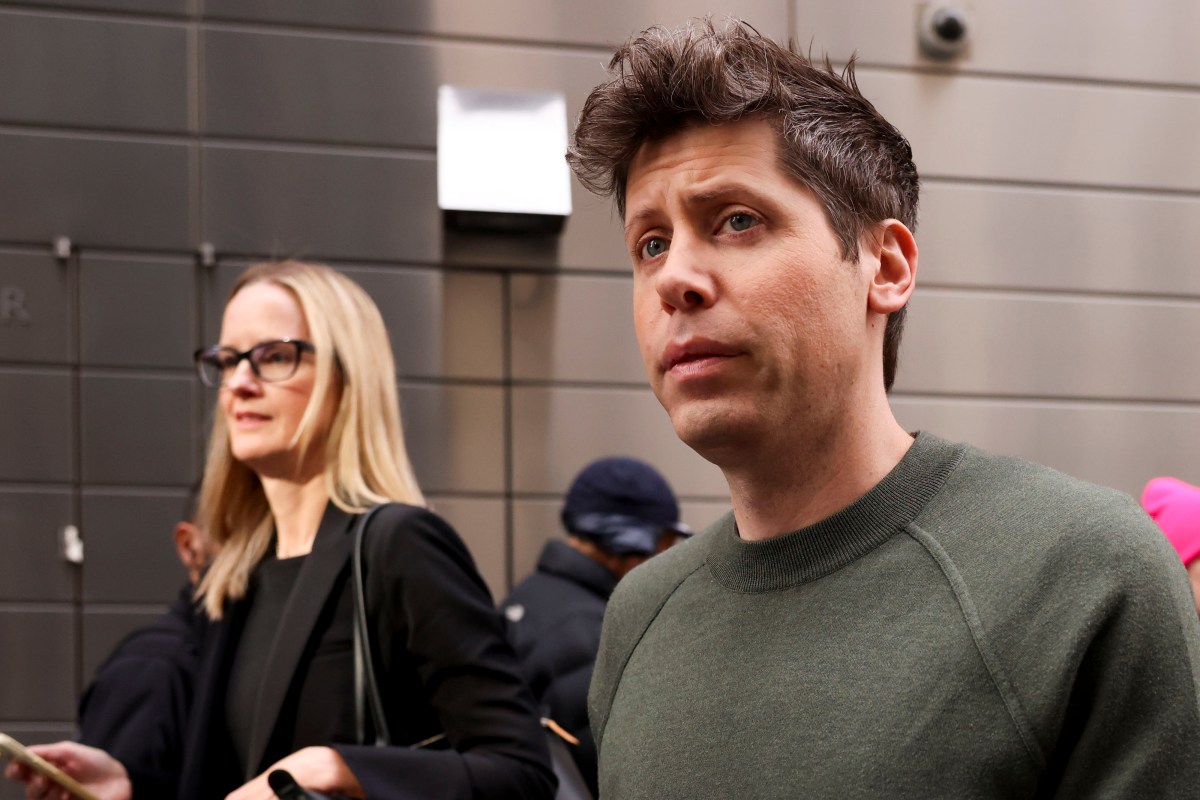
OpenAI CEO Sam Altman sat before Congress in 2023 to testify about the dangers of AI. He told American lawmakers at the time that he owns no equity in OpenAI, something he’s said many times, claiming he just runs the company because he loves it.
However, Altman recently said he actually did have some equity in OpenAI through a Sequoia fund at one point, a stake he has since sold. In an interview with Bari Weiss released Thursday, Altman was asked what kind of stake he might have if OpenAI successfully converts into a for-profit company.
Here’s what the OpenAI CEO said:
I have a tiny sliver of equity from an old YC fund — I used to have some via a Sequoia fund but that one turned out to be easier to like sell and not keep the position in — so I have a very small amount that’s quite insignificant to me. In terms of what I will or won’t have going forward, I don’t know. There’s no current plan or promise for me to get anything.
While Altman’s investment through Y Combinator was known, his investment through Sequoia was not. OpenAI discloses Altman’s indirect investment in his own company through YC on its website. The startup says this “small investment” is the CEO’s “only interest” in the company and was made before he worked full time at OpenAI.
Sequoia first invested in OpenAI in 2021, according to its website, two years after Altman became the full-time CEO of OpenAI. At that time, OpenAI was worth roughly $14 billion, a valuation that’s exploded to $157 billion after the startup’s latest funding round earlier this year — a round Sequoia participated in as well.
While Sequoia’s stake in OpenAI from 2021 is worth a lot more now, there are several unknowns about Altman’s investment through the venture firm. Venture firms like Sequoia aren’t required to disclose their limited partner investors. It’s unclear when Altman sold the stake and for how much.
An OpenAI spokesperson confirmed Altman’s prior exposure in a statement to TechCrunch, but did not offer specifics on these aspects.
“Sam has never had any direct ownership in OpenAI. He held a negligible stake, less than a fraction of a percent, in a general Sequoia fund with a broad portfolio, which he later learned included minimal exposure to OpenAI,” said OpenAI spokesperson Kayla Wood in a statement to TechCrunch. “Sam no longer has any ongoing commitments to the fund.”
Most CEOs do have equity in the companies they run. The biggest percentage of a CEO’s pay if they are running a public company is equity. And of course, startup founders start their journey owning all of the equity in their companies, until they grant shares to employees and sell off chunks to investors. But OpenAI was founded as a nonprofit, has a strange structure, and Altman has repeatedly said he doesn’t own any. Just this month, Altman said he had no equity in OpenAI during The New York Times’ DealBook Summit.
During a May interview with the All In podcast, the OpenAI CEO said he originally decided to not take equity in the company because of its corporate structure. According to its charter, OpenAI’s nonprofit board is required to be filled with a majority of independent directors, meaning they can’t have equity in the company. Altman says this led him to not take any equity, in order to be one of those independent directors. However, this has caused many people to question the CEO’s motives at the company, Altman said, which is likely one reason the company is shifting away from this structure.
Altman’s stake in OpenAI has also become increasingly relevant as the company attempts to transition its for-profit branch, which is currently controlled by the nonprofit board, into an independent company. OpenAI is also reportedly contemplating granting the CEO some equity in this transition, though the company and Altman have denied that there are related plans.
OpenAI’s for-profit transition is currently at risk of being held up by Elon Musk’s lawsuit against the startup. At its core, Musk’s lawsuit claims that OpenAI is abandoning its original nonprofit mission to make the fruits of its AI research available to all. However, OpenAI recently claimed that Musk wanted to convert the startup into a for-profit from the start.
At one point in Altman’s interview with Weiss, the OpenAI CEO called Elon Musk a “bully” who “clearly likes to get in fights.” At another point, Altman lashed out at Meta for asking California’s attorney general to block OpenAI’s for-profit transition.
“I don’t know why Meta sent that letter, but I do know they know that’s not how it works. I know that part is in bad faith,” said Altman. “You can imagine lots of other reasons that Meta might have sent this letter. You can imagine they wanted to curry favor with Elon, you can imagine that they felt like it would help them compete with us.”
While the company says Altman’s exposure to OpenAI through Sequoia was negligible, it’s hard to square Altman’s comments about having no equity in OpenAI with his most recent remarks on Weiss’ podcast.