
Summary: Asian needle ants are stealthy, painful, and potentially deadly. Their quiet spread across the U.S. raises concerns both for human health and the environment. Though difficult to eradicate, awareness and cautious landscaping practices may be the best tools we have—for now.
The Surge of a Silent Threat
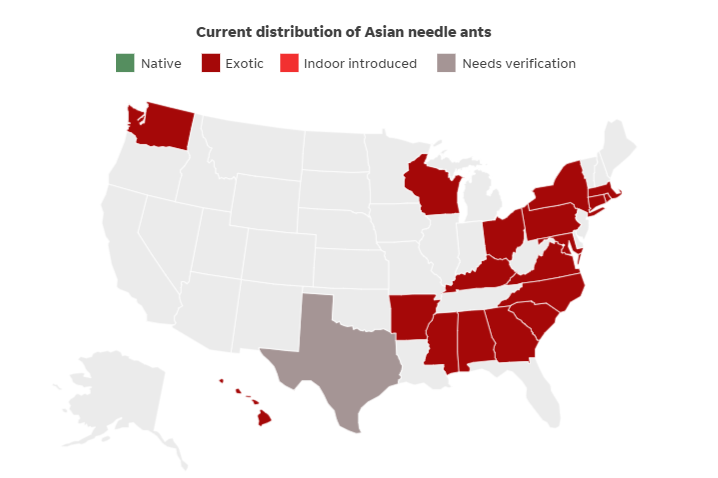
An invasive species of stinging, carnivorous ants—known as Asian needle ants—has been steadily spreading across about 20 U.S. states, causing health scares and ecological disruption.
Last year, Georgia alone saw at least three life-threatening anaphylactic reactions due to these little-known insects.
“Imagine somebody inserting a needle directly into your flesh,” said Benoit Guénard, professor of ecology and entomology at the University of Hong Kong. “It’s a very sharp, acute pain but it’s quite local.”
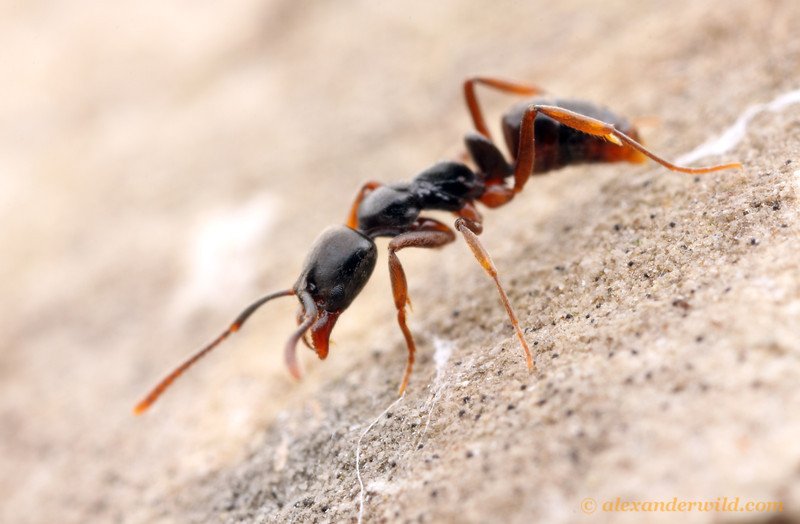
Despite their growing numbers, spotting these ants is no easy task. They’re small, dark brown, and blend effortlessly with leaf litter and mulch—making them nearly invisible until it’s too late.
Also Read: Popular Diabetes Drug Linked to Longer Life – Could It Help You Live Past 90?
Hard to Track, Harder to Kill
Originally discovered in Decatur, Georgia in 1932, the Asian needle ant only began to pose serious concern over the past two decades. The ants, scientifically known as Brachyponera chinensis, have now reached as far north as Connecticut and as far south as Florida, with sightings also in Wisconsin, Washington state, and even Texas.
“They’re pretty widespread on the East Coast,” said Daniel Suiter, a professor of urban entomology at the University of Georgia. “If you live in an area which is dominated by hardwood trees, there’s a good chance there are Asian needle ants underfoot.”
Unlike other ants, these don’t lay down scent trails, making traditional tracking methods ineffective. Instead, they remain hidden, favoring damp environments like rotted logs, firewood, potted plants, and mulch.
“Most ants are in-your-face invasive… These remain hidden,” Suiter explained.
A Sting That Keeps Coming Back
The sting of the Asian needle ant is anything but ordinary.
“The first, initial pain lasted a few seconds… Then about five minutes later… ‘ouch!’ as if somebody had stung me again in the same place,” Guénard described. “The pain continues to reoccur… For me, it goes on for about two hours. But I know in some people it lasts for as much as 24 to 48 hours.”
The venom is potent enough to cause allergic reactions and even deadly anaphylactic shock in some individuals. According to Guénard’s reports, at least 12 individuals across states like Georgia, Kentucky, and Tennessee suffered severe allergic reactions.
“I fully expect that some people who end up in the emergency room were stung by them but didn’t realize it,” Suiter said.
Decades of Mystery
Despite being present in the U.S. for nearly a century, their explosive spread didn’t begin until the 1980s and 1990s—a timeline that continues to puzzle scientists.
“It’s very likely the ants were introduced in the early 20th century… but remained relatively localized well into the 1970s,” Guénard said.
A comprehensive 1962 ant inventory in North Carolina didn’t detect them at all. Then, between 1991 and 2017, they began appearing throughout the state.
“Something happened,” Guénard noted. “I could not tell you exactly what.”
Silent Ecological Disruption
Asian needle ants aren’t just a health concern—they’re damaging ecosystems too. Their diet includes flies, beetles, and termites. While termites may be pests in homes, in forests they play a crucial role in decomposing dead wood.
“They’re very important because they help with the decomposition of dead wood and other organic matter,” Guénard explained.
Their spread also displaces native ants that help disperse seeds. Without them, some plant species lose their natural propagation mechanism.
“The seeds just die rather than being dispersed,” he said.
Climate Change and the Expanding Frontier
As climates across the U.S. become warmer and wetter, the suitable habitats for Asian needle ants are expanding. Guénard’s research indicates that their range could increase by up to 75% over the next 50 years.
How Dangerous Are They?
Unlike fire ants, Asian needle ants don’t swarm or seek out confrontation. But they will sting defensively when disturbed. The danger lies in their venom:
“If you’re sensitive to insect stings,” warns Theresa Dellinger of Virginia Tech, “carry an EpiPen.”
A Korean study found that 2.1% of those stung experienced systemic allergic reactions, and 1.2% went into anaphylaxis.
Symptoms can include:
- Hives, itching, flushed or pale skin
- Constricted airways and difficulty breathing
- Swollen tongue or throat
- Weak, rapid pulse
- Nausea or vomiting
- Dizziness or fainting
- A feeling of impending doom
Unlike fire ant stings, Asian needle ant stings do not blister, making them harder to diagnose.
What Can You Do?
Eradicating these ants is difficult.
“One worker ant will pick up another worker ant and drag it over to the food source to show it where it is,” said Dellinger.
Without pheromone trails, baiting becomes a slow and often ineffective process. Dellinger recommends protein-based bait, although its success may vary.
“Try to treat the nest,” she advised, noting that broad spraying may harm other beneficial garden insects.
Other practical tips include:
- Remove mulch from areas of concern
- Elevate firewood to keep it dry
- Monitor areas where ants are spotted
- Contact local agricultural extensions for ant identification
“There are a lot of ants out there,” said Dellinger. “We get out the microscope.”