
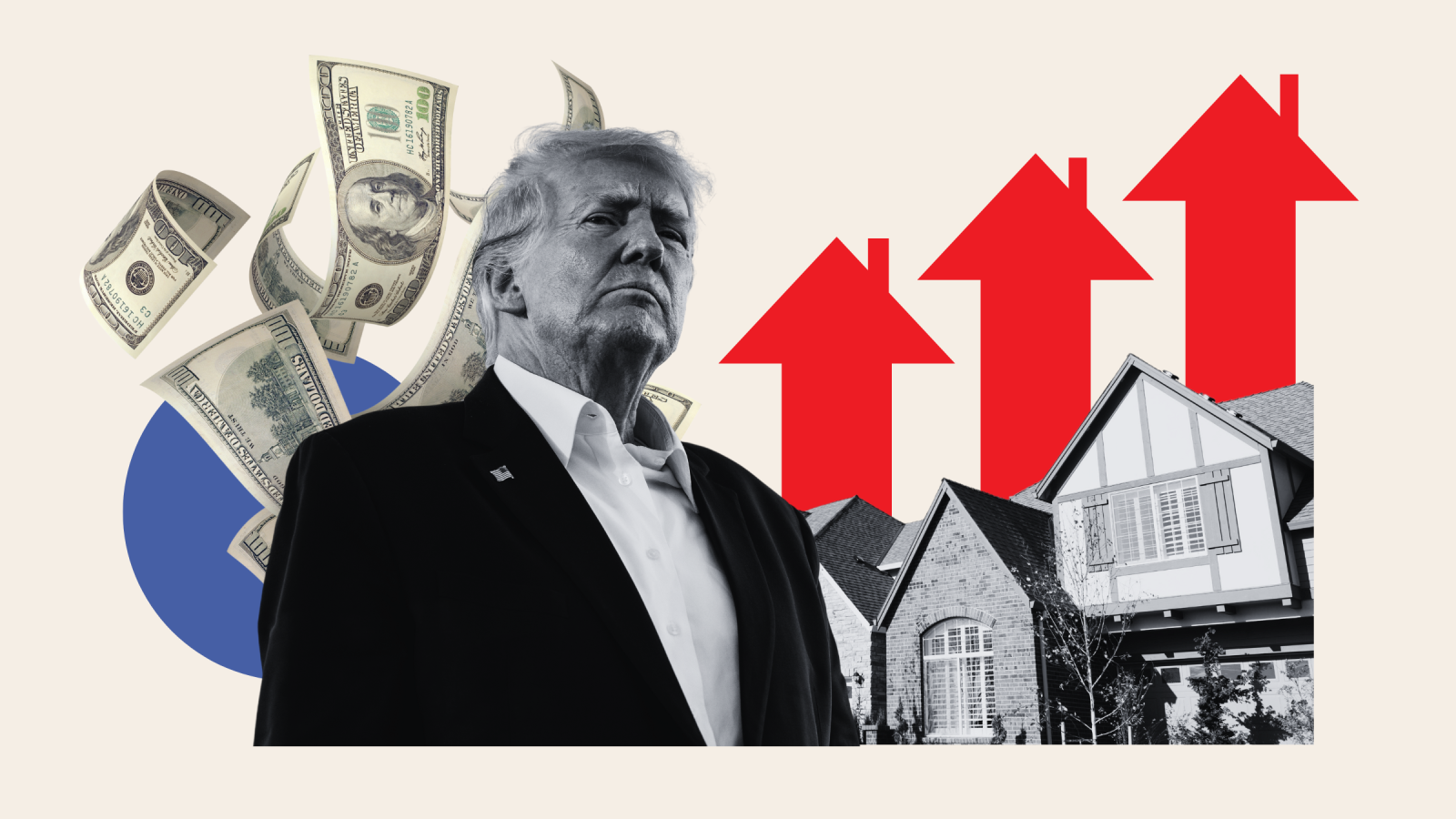
Americans are increasingly concerned that President Donald Trump policies could stall the economy. However, for homebuyers, that uncertainty is bringing an unexpected benefit.
Rates on 30-year fixed-rate mortgages have dipped below 7 percent in recent weeks, driven by declining economic sentiment that has unsettled Wall Street and disrupted investment strategies.
As a result, applications for new mortgages jumped by over 11 percent in early March — a 31 percent increase compared to the same period last year, aligning with the housing market’s peak spring buying season. Refinancing activity has also surged as homeowners take advantage of lower borrowing costs.
On Tuesday, the government reported an 11.4 percent rise in single-family home construction last month.
“No one should underestimate the pent-up demand in housing across the economy,” said Joe Brusuelas, chief economist at consulting firm RSM US. “Once unleashed,” he said, it would “bolster the overall economy.”
A Potential Boost for Trump’s Economy
A rebound in the struggling housing market could be a much-needed win for Trump, as consumer confidence weakens in the early days of his new administration. Skyrocketing home prices and rising mortgage rates have frozen the market in recent years, contributing to inflation and worsening affordability issues that fueled voter dissatisfaction with Biden’s economic policies.
However, growing fears that Trump’s tariffs will reignite inflation are weighing on consumer sentiment.
Stock prices have declined, and Wall Street analysts are revising economic forecasts to account for the rapid and unpredictable rollout of new trade measures. Business leaders have warned that new investments are being delayed, and consumer spending is beginning to show signs of strain.
Interest Rates Decline Amid Market Uncertainty
Concerns over tariffs, regulatory uncertainty, and mixed inflation data are paradoxically helping the housing market by pushing interest rates down, said Lawrence Yun, chief economist at the National Association of Realtors.
“Even in an economic recession, generally home sales can rise if the mortgage rate declines,” Yun noted. With the Federal Reserve expected to cut borrowing costs later this year, mortgage rates are likely to continue declining.
“This is a year where we will begin to see meaningful growth in home sales,” Yun predicted, citing both lower mortgage rates and increasing inventory. The supply of unsold existing homes rose by 3.5 percent in January, according to NAR, with February’s sales data set for release Thursday.
Mortgage rates typically follow the movement of 10-year Treasury note yields, which have dropped sharply since February as investors seek safety from stock market volatility. This has helped pull mortgage rates down.
While lower mortgage rates could spur homebuying and benefit the economy, it might not be enough to prevent a broader downturn if consumer spending weakens and sentiment continues to decline.

Builders Face Challenges Despite Increased Demand
Despite the positive momentum, builders remain exposed to economic headwinds. Tariffs threaten to raise construction costs, exacerbating a housing supply shortage.
Trump’s immigration policies could also shrink the pool of available workers in the construction industry, potentially driving up labor costs. These pressures pushed the National Association of Home Builders and Wells Fargo’s confidence index to a seven-month low in March.
Although government data showed a strong rebound in new home construction in February, permits for future projects fell by 0.2 percent. This suggests that the housing supply crunch, which has kept homeownership out of reach for many buyers, is unlikely to resolve quickly.
“The lack of available existing inventory is still holding things down,” said Mike Skordeles, head of U.S. economics at Truist. “Buyers get discouraged when there’s not enough inventory, and they get discouraged relatively quickly.”
Economic Slowdown Could Weigh on Borrowers
The uncertainty surrounding economic conditions may also make both borrowers and lenders more cautious. The Federal Reserve Bank of New York reported Monday that the share of discouraged borrowers — those who have not applied for credit due to fear of rejection — has reached its highest level since October 2013.
Higher-than-expected inflation and labor market trends could force the Federal Reserve to keep interest rates higher for longer, said Skylar Olsen, chief economist at Zillow. Additionally, rising costs for essential goods mean the “affordability pinch is not gone.”
Mike Fratantoni, chief economist at the Mortgage Bankers Association, warned that the decline in mortgage rates may not last.
“We’re forecasting just one more [Fed] rate cut in the third quarter of this year,” he said.
Overall, he added, “the downside risks relative to our forecast have increased” given the softening job market.
Uncertain Outlook for the Housing Market
Most economists expect economic growth to continue in 2025, with inflation unlikely to reach the painful levels experienced under Biden’s administration. However, the housing market’s recent gains could quickly evaporate if a recession takes hold.
“There’s a lot of uncertainty right now in the market. That’s going to have an impact on things like business investment and home buying decisions,” said Rob Dietz, chief economist at the National Association of Home Builders. “We’re in an environment where the individual monthly data points are going to change a lot, so the volatility in the market is also going to be a challenge.”