The stock market has shrugged off the April tariff-driven meltdown, with the S&P 500 delivering a scorching 25% rally since April 9, when President Donald Trump paused reciprocal tariffs proposed on April 2, so-called “Liberation Day.”
The market’s gain has happened despite worrisome economic data suggesting slowing activity that leaves the door open to stagflation or recession. The jobs market is shaky and inflation progress appears stalled. GDP estimates are falling, and the Federal Reserve appears boxed in regarding much-wanted interest rate cuts.
The “buy-the-dip” mentality and the FOMO it spawned have fueled a market that has defied gravity so far. However, many wonder if stocks may have gotten ahead of themselves, suggesting it may be time to “sell the rip.”
Veteran Market Titan Bill Gross Weighs In
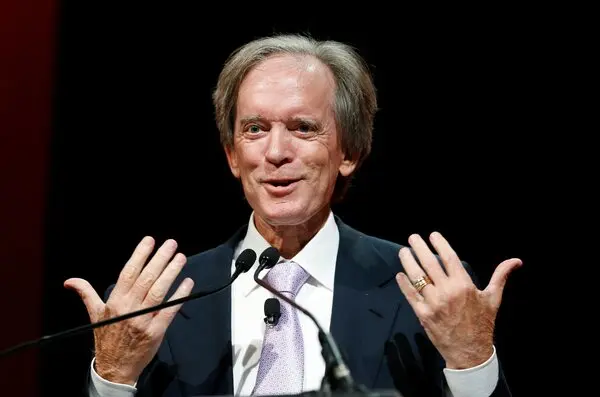
The market action and potential risks facing the economy have led many on Wall Street to update their stock market predictions, including Bill Gross, who has been tracking markets professionally since 1971.
Gross co-founded Pacific Investment Management Co., or PIMCO, a top asset manager with $2 trillion under management. As the portfolio manager for PIMCO’s $270 billion Total Return Fund, his market calls earned him the nickname “Bond King” before he joined Janus Henderson Investors, where he worked from 2014 to 2019.
Gross’s 50-year career means he’s witnessed many market tops and bottoms. This week, he made a bold stock market prediction that included an update on how he’s positioning his own money after the S&P 500’s record-setting run higher.
Fed’s Tightrope: Rates, Inflation, and Growth
The Federal Reserve has a tough job. Its dual mandate is to set the Fed Funds Rate at levels that result in low unemployment and inflation — two often contradictory goals.
When the Fed cuts interest rates, it sparks economic activity that boosts employment and causes inflation. When it raises rates — like in 2022 and 2023, when it increased rates by 5% to battle runaway inflation — it caps economic growth, slowing inflation but raising unemployment. As a result, the Fed’s monetary policy walks a tightrope.
That’s been the case this year.
Amid signs of economic slowing, Fed Chairman Jerome Powell has left the Fed Funds Rate unchanged at 4.25% to 4.5%, a significant disappointment following 1% rate cuts into the end of 2024.
Powell is reluctant to reduce rates despite significant jawboning from President Trump’s administration, which wants lower rates to help offset risks that tariffs weigh down gross domestic product, or GDP.
In 2024, GDP grew at a healthy 2.8%. However, the World Bank estimates the U.S. economy will only grow 1.4% this year.
The slower growth may already be causing problems for the job market. According to Challenger, Gray, & Christmas, layoffs totaled over 696,000 through May this year, up 80% year over year.
Meanwhile, the unemployment rate, while historically low, has risen to 4.1% from a low of 3.4% in 2023.
The Fed’s hesitancy in the wake of slower GDP and job losses is based on concern over inflation. The Central Bank’s hawkish policy on rates wrestled CPI inflation below 3% from 8% in 2022; however, progress has slowed recently.
In June, headline CPI inflation increased 2.7% from one year ago, up from 2.6% in May. Many economists believe that corporations passing higher tariffs to consumers will cause inflation to continue climbing in the second half of the year.
If so, adding rate cuts to the mix could further fan inflationary fires, resulting in another inflationary spike.
Still, the Fed’s unwillingness to lower interest rates may mean that it falls behind the curve, which could make avoiding a recession more difficult.
The University of Michigan’s Consumer Sentiment Survey fell 11% year-over-year to 60.7 in June due to worry over inflation, potentially signaling that some households may reduce spending.
Meanwhile, the ISM Manufacturing PMI, a measure of factory activity, was 49, and its June Services PMI was 50.8, 1.6 percentage points below the 52.4 average over the past 12 months. Those readings aren’t bad, but don’t indicate robust activity.
Bill Gross Warns: “Investors Wake Up!”
Bill Gross’s long Wall Street career has given him front-row seats to the rise and fall of the Nifty 50, skyrocketing inflation in the 1970s, the S&L crisis in the late ’80s and early ’90s, the Internet boom and bust, the Great Recession, Covid, and the 2002 bear market.
He previously said on X on June 24 that he expected “a ‘little bull market’ for stocks.” His mood has turned more bearish amid growing White House calls for Fed Chair Jerome Powell’s resignation.
“Investors wake up!” implored Gross on X. “The timing of the new Fed chair is less significant than the influence he will have on his committee. If he can sway the committee’s thinking over time, bond markets will increasingly go curve positive, the dollar will weaken, and inflation will likely move to a 3% center.”
Gross went on to explain that he thinks that “some aspects of this are stock market positive,” but also said that “others are not.”
Overall, he thinks “uncertainty on Fed policy, tariffs, and the influence of AI will be significant.”
Historically, uncertainty hasn’t been a great recipe for stock market gains.
Gross concluded bluntly, “I for one am moving defensively — more cash, buying value with 4–5% dividend yields.”
Where Is Gross Investing Now?
What stocks does Gross favor in his defensive portfolio?
He mentions master limited partnerships for pipeline companies, which offer above-average yields.
“I continue to like MLP pipelines with their high tax-deferred dividends (7–9%) and future infrastructure prospects due to AI, AI information centers, electricity demand, and the natural gas needed to generate it. (PAA), (WES) are my favorites,” wrote Gross.
He’s also looking at high-yielding consumer stocks, including Kraft Heinz (KHC). Consumer goods stocks typically perform best during a recession.
“Becoming intrigued with food stocks. They’re going nowhere pricewise but a 6.2% yield on KHC (Kraft Heinz) is attractive for income. It’s breaking the company into two parts which may push price a little higher,” said Gross.