
Nasa launch schedule tracking has shifted into overdrive as our permanent return to deep space materializes before our eyes. For astronomy enthusiasts, technical researchers, and casual observers alike, keeping a close pulse on these precise windows provides a front-row seat to historical breakthroughs. Following the milestone return of the crewed Artemis II spacecraft, which shattered distance records and safely brought its four-person test crew back from lunar orbit, the global launch manifest is accelerating.
The current schedule functions on highly synchronized, multi-agency parameters. These timelines cover the deployment of foundational orbital stations, deep-space planetary rovers, and highly sensitive infrared telescopes built to map the farthest corners of our universe.
The Artemis Blueprint: Human Expeditions on the NASA Launch Schedule
The foundational core of the modern nasa launch schedule belongs strictly to the Artemis program. By transitioning the global space sector away from brief experimental footprints toward permanent, sustainable deep-space architecture, these planned windows establish a generational shift in execution.
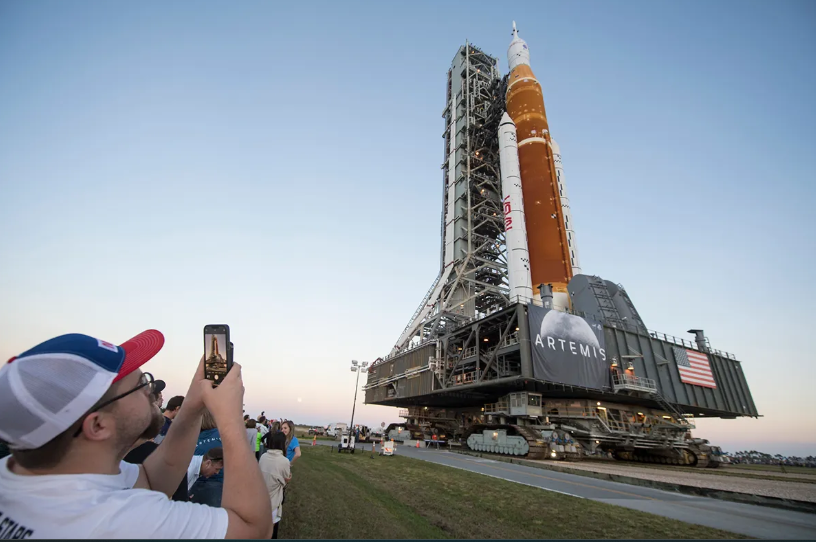
Artemis III: Initial Earth-Orbit Architectural Integration
Currently targeted for mid-2027, the historic Artemis III mission will put the highly complex operational choreography of modern deep-space logistics to the ultimate test. Launched atop the towering Space Launch System (SLS) Block 1 rocket from Launch Complex 39B at the Kennedy Space Center, a four-astronaut crew will navigate their Orion capsule directly into a strategic Low Earth Orbit (LEO). Once in orbit, the primary mission objective is a high-stakes automated rendezvous and docking checkout sequence with commercial Human Landing Systems (HLS)—currently under development by major private industrial partners SpaceX and Blue Origin. This step fully confirms absolute reliability for integrated lifecycle support, high-frequency communication links, and emergency propulsion handoffs before human crews depart for sustained deep-space orbits.
Artemis IV and Beyond: Assembling Deep Space Infrastructure
Slated for early 2028, Artemis IV represents the operational debut of the more powerful SLS Block 1B heavy-lift design. This crucial manifest entry will ferry crews alongside massive pressurized segments destined for the historic Lunar Gateway outpost. By late 2028, the schedule transitions into a steady annual sequence of crewed surface exploration and permanent settlement operations.
Building the Lunar Gateway Harbor on the NASA Launch Schedule
NASA is not simply visiting the Moon anymore; they are anchoring a permanent international harbor directly in a unique near-rectilinear halo orbit. The Lunar Gateway will act as a deep-space transfer hub, accommodating continuous robotic deployments and preparing human crews for future crewed journeys to Mars.
| Mission Segment | Primary Launch Vehicle | Estimated Window | Strategic Operational Purpose |
| Gateway PPE & HALO Modules | SpaceX Falcon Heavy | Late 2027 | Deploys the primary 60-kilowatt solar electric Power and Propulsion Element combined with the initial living quarters. |
| Gateway Logistics (Dragon XL) | SpaceX Falcon Heavy | Late 2027 | Delivers crucial deep-space life support supplies, hardware, and experimental science arrays to the uncrewed harbor. |
| Astrobotic-3 Mission | SpaceX Falcon Heavy | Late 2027 | Integrates commercial scientific payloads and surface scouting assets to establish data loops with the Gateway station. |
By offloading early orbital assembly components to reliable commercial platforms like the Falcon Heavy, NASA preserves its custom-built SLS rocket components exclusively for launching crewed deep-space human transport missions.
Advanced Planetary Science and Robotics Mapping on the NASA Launch Schedule
While human exploration commands massive global attention, uncrewed robotic vehicles make up the vast majority of active entries on the master flight roster. These highly complex probes pave the physical pathways forward, mapping vital natural resources and unlocking cosmic secrets.
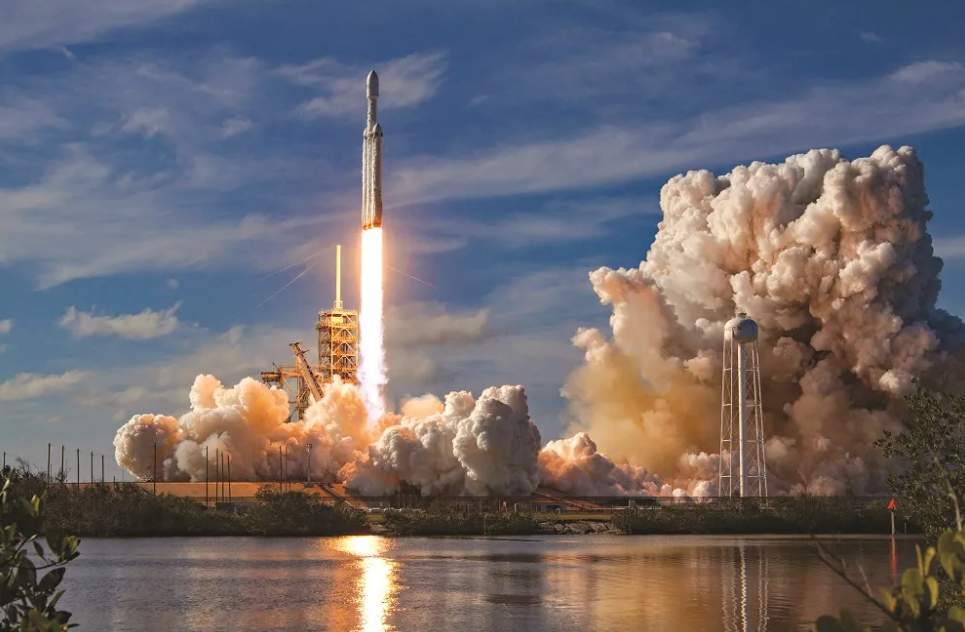
Commercial Lunar Payload Services (CLPS) Integration
Through the highly cost-efficient CLPS program, private contractors handle instrument transport to the lunar surface. A major entry on the schedule is the Griffin Mission One, which will use a commercial heavy rocket to deploy the specialized FLIP (FLEX Lunar Innovation Platform) rover near the South Pole. Its technical objective is to directly track and extract water ice reserves—a resource critical for fuel manufacturing on future extraterrestrial bases.
The accelerated Nancy Grace Roman Telescope Launch
In a major update to the scientific timeline, the long-awaited Nancy Grace Roman Space Telescope has been moved up to an accelerated target date of September 2026. Setting off aboard a SpaceX Falcon Heavy, this massive infrared space observatory will capture panoramic cosmic landscapes with incredible detail. Over its primary five-year mission, the Roman telescope is set to transmit thousands of terabytes of data, helping scientists study dark energy, trace cosmic structures, and track thousands of newly discovered alien worlds across the galaxy.
Frequently Asked Questions (FAQs)
When is the next crewed Artemis flight scheduled?
Following the historic completion of the Artemis II mission, the next crewed flight on the manifest is Artemis III, currently targeted for mid-2027. This high-profile mission will send a four-astronaut crew into Earth orbit to perform essential operational checkout maneuvers and integrated docking tests with new commercial landing vessels.
Which rockets handle the major deep-space missions?
NASA relies on its heavy-lift Space Launch System (SLS) for primary crewed deep-space transport, such as the core Artemis flights. For orbital commercial resupply, robotic science rovers, and structural station segments, the agency utilizes private commercial launch vehicles, primarily SpaceX’s Falcon 9 and Falcon Heavy.
When will the Nancy Grace Roman Space Telescope launch?
The Nancy Grace Roman Space Telescope launch has been officially accelerated to September 2026. It will lift off from Launch Complex 39A at the Kennedy Space Center aboard a commercial Falcon Heavy vehicle to begin its intensive dark matter and exoplanet mapping campaign.
Peer-Reviewed Real Estate & Academic References
- NASA Policy Division. (2026). Exploration systems development and Moon to Mars flight manifests. National Aeronautics and Space Administration Manifest Logs. https://www.nasa.gov/humans-in-space/artemis/
- Spaceflight Now Tracking. (2026). Orbital launch schedule and countdown manifest updates. International Rocket Launch Network. https://rocketlaunch.org/launch-schedule/nasa
- Science Systems Directorate. (2026). Nancy Grace Roman Space Telescope: Accelerated timeline and mission profiles. Goddard Space Flight Center Publications. https://unb.com.bd/category/Science/nasas-roman-space-telescope-set-for-earlier-launch-to-unlock-secrets-of-the-universe/186275
To watch how engineers assemble these massive vehicles on the pad, check out this Space Launch Schedule Analysis, which breaks down exactly how these heavy-lift rockets transform from structural components into operational deep-space vessels. This video provides an incredible visual look at the hardware driving these incredible manifests into reality.