
Shipwrecks
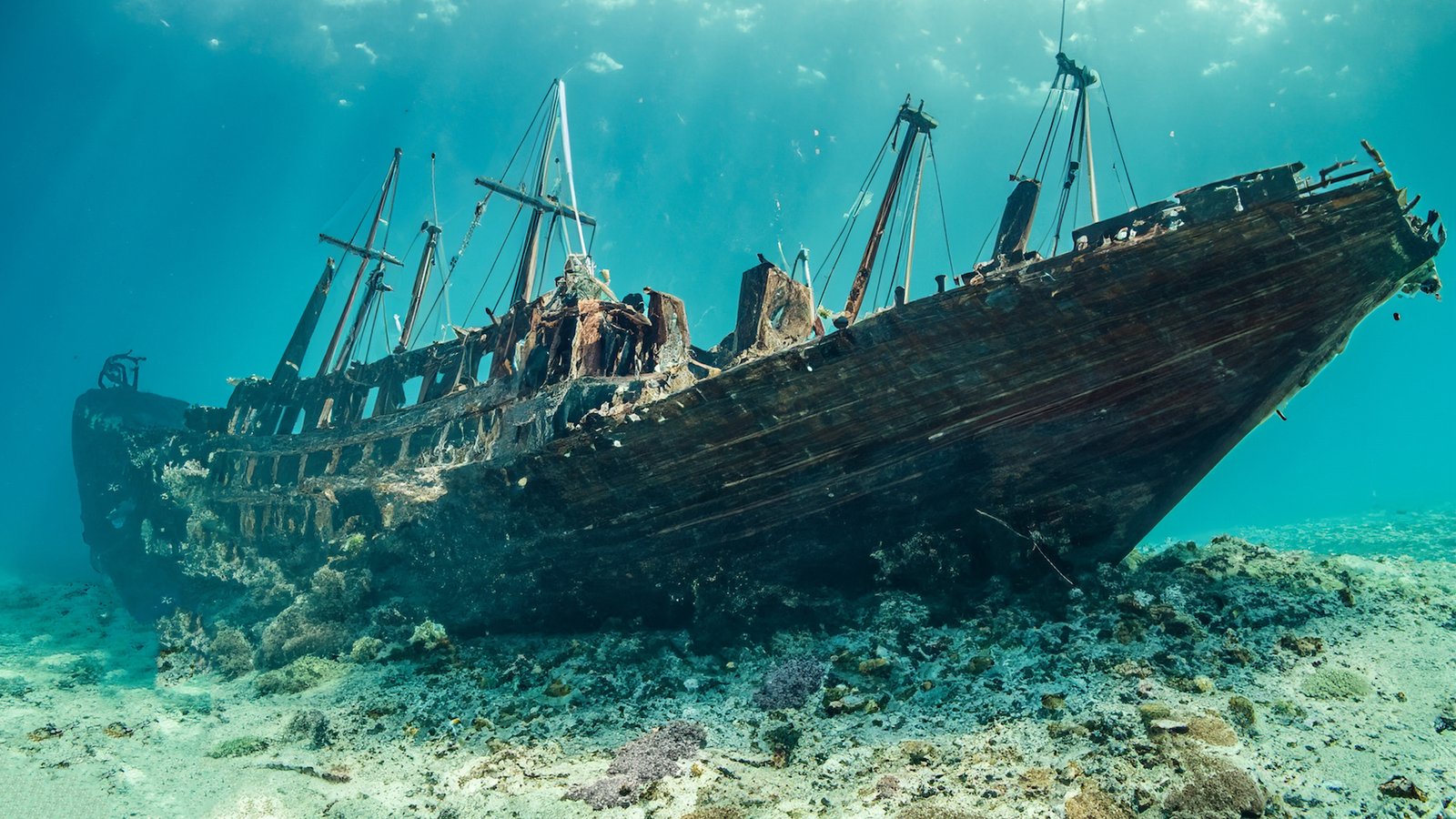
Construction on the Varberg Tunnel in Sweden—part of a modern railway project—has resulted in an unexpected bounty of historical underwater finds: six shipwrecks spanning the Middle Ages to the 17th century, all maritime remnants of what was once a bustling harbor.
Of the six separate wrecks found, four are from the Middle Ages (or Late Middle Ages), one is from the 17th century, and one couldn’t be dated, according to a translated report from archaeology consultant group Arkeologerna.
Shipwreck 2: The Star of the Discovery
Elisabet Schager, Arkeologerna project manager, said in a translated statement that wrecks Nos. 2, 5, and 6 were the most intriguing. Found in the central part of the city, which was once an original shoreline and location of harbor defenses, Wreck 2 was both the most preserved and the only with a continuous structure.
Shipwreck 2 comprises the remains of an oak sailing ship built during the second half of the 1530s. Using timber from West Sweden, the clinker-built style craft—where the edges of the timbers overlap—still included two hull sections from the ship’s starboard side, along with scattered timbers. The ship’s design also featured a berghult, or rock beam—a protective strip on the outside of the hull, which Schager called “exciting.”
“It functions as a reinforcing support strip to protect the hull when docking, and can also serve as a brace for the superstructure.”
In a fascinating twist, the team found traces of a fire on the protective strip of Wreck 2, meaning that the ship could have been intentionally burned before it sank.
Related News: Where Homes Sell Fastest and Slowest in the U.S
Shipwreck 5: Baltic Connections
Wreck 5, which is from the 17th century, has much in common with Wreck 2, including local oak and a clinker-plank design. Experts believe both ships were likely sailed in the waters beyond the two medieval cities of Varberg and Ny Varberg, and that Wreck 5 also likely sailed much of the Baltic Sea.
Wreck 6: Dutch Design Influence
Wreck 6, though, differs from the other two craft. This was the only caravel-style ship of the six, a style in which the planks are laid edge to edge, attached to the frame, and not wrapped around for a smooth finish. Also made of oak, Wreck 6 was the only wreckage with a preserved keel.
This rabbeted (or grooved) keel shows traces of Dutch shipbuilding tradition, but experts were unable to date the timber.
Wrecks 3 and 4: Echoes of Medieval Trade
Wrecks 3 and 4—both from the 14th century—were flat-bottomed ships common in medieval trade. Crews will work to analyze these ships further, hoping to find additional clues about maritime life during the Middle Ages, including the area’s trade networks.
A Growing Archive Underfoot
As more large infrastructure projects occur on the West Coast of Sweden, Schager said that crews are finding more shipwrecks in the areas that were either harbors or entirely underwater during the Middle Ages and early modern period, but may now be parts of city centers.
The current work is happening in tandem with Bohuslän Museum, Visual Archaeology, and Cultural Environment Halland.
“It will be very interesting,” Schager said, “and we will have a lot of exciting things to tell in the future.”