

After 31 years of battling treatment-resistant depression, a 44-year-old man found hope through PACE, a new personalized brain stimulation therapy. Using precision brain mapping, researchers tailored stimulation to his unique patterns, leading to a surge of overwhelming joy and long-term improvements that lasted over 30 months, offering a glimpse of lasting wellness
According to a recent preprint study on OSF, a 44-year-old man “who struggled with severe depression for 31 years, experienced a remarkable turnaround after undergoing PACE (Personalized Adaptive Cortical Electro-Stimulation).”
For more than three decades, the patient “lived with the persistent weight of treatment-resistant depression, alongside PTSD and panic disorder.” His psychiatric issues began in childhood: “the first signs of psychiatric issues appearing when he was just a kindergartner.”
The study describes how he endured “numerous hospitalizations, psychiatric evaluations, and multiple rounds of therapy.” Over the years, he tried “at least 19 different” medications and underwent “three rounds of electroconvulsive therapy (ECT), none of which provided lasting relief.” His history also included “periods of extreme hopelessness, including suicidal ideation and attempts.”
Personalized Brain Stimulation
The new treatment, called PACE—Personalized Adaptive Cortical Electro-Stimulation—was designed to tailor stimulation to each patient’s brain. Researchers explained that the process used “precision functional mapping, which uses functional magnetic resonance imaging (fMRI),” to create a “brainotype” specific to this individual.
This mapping “helped the team identify specific areas of the brain to target, ensuring that the treatment was as effective as possible for his unique neurological patterns.” Unlike generalized approaches, “the stimulation could now be adjusted in real time, based on the patient’s immediate responses.”
Weak Dollar Reshapes US Stock Market as Multinationals Outperform
An Abnormal Finding
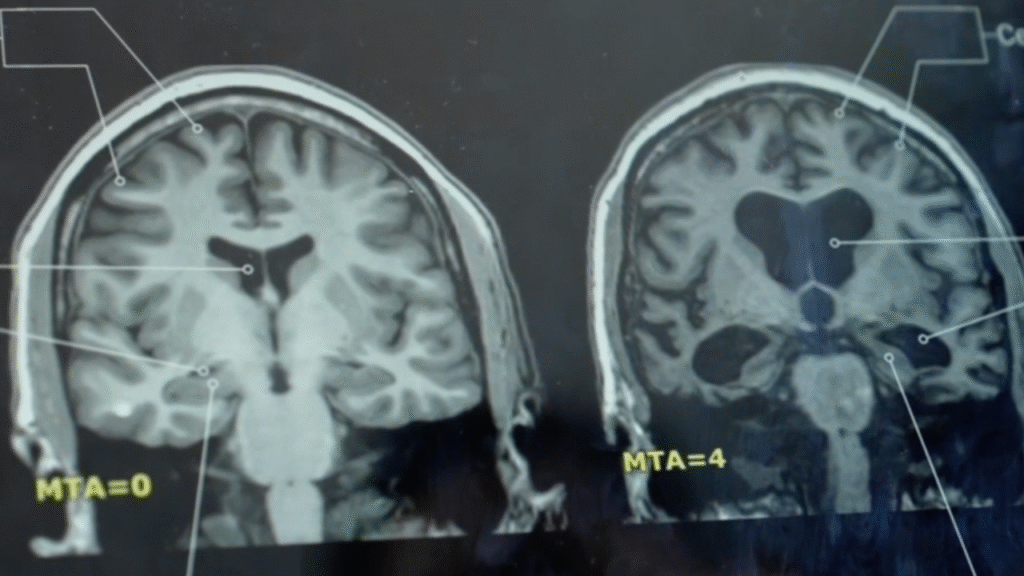
The study noted that “the patient’s salience network was highly atypical.” The salience network, which helps the brain “identify and respond to important environmental signals,” was unusually enlarged in this case. It “covered 12.4% of the cortical surface area, which is four times more than is typically seen in healthy individuals.”
This enlargement “is linked to depression” and became a key factor in planning the stimulation targets.
A Life-Changing Breakthrough
The results of the stimulation were immediate. After electrodes were implanted, the patient experienced a dramatic shift: “The first time the default mode network (DMN) was targeted, the patient felt an overwhelming surge of joy—a sensation he described as ‘so weird to feel.’”
In his own words, “It feels nice. So weird to feel. It is so emotional.” The moment left him in tears and was described as “a powerful testament to the intensity of his feelings.”
Why PACE Is Different
The researchers stressed that PACE differs fundamentally from conventional methods like ECT. The study explained: “Traditional ECT tends to be more generalized, applying a one-size-fits-all approach to brain stimulation. However, PACE’s design is fundamentally different—it tailors the stimulation to the specific needs and brain activity patterns of each patient.”
As the authors noted, “PACE provided [the patient] with the longest stretch of wellness he had experienced in his adult life.”
Long-Term Improvements
The improvements were not short-lived. Within seven weeks, “the patient’s suicidal thoughts had completely dissipated.” After four months, his mood “improved by 59% on standardized depression scales.”
Most importantly, these benefits lasted: “these improvements were sustained over a period of at least 30 months.” The study concluded that this “offered the patient a glimpse of a life free from the oppressive grip of depression.